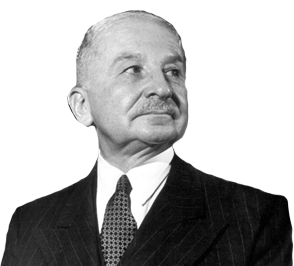
A great strength of the Austrian School of Economics is the breadth of academic scholarship that it can enrich. The philosophic underpinnings of the Austrian economists, and specifically of Ludwig von Mises, universalize the principles of economic activity to all
Emerging Scholars Program 
“Left-Over” Women and Gender Inequality in China
Whoever has read The Pride and Prejudice must remember Mrs. Bennet, whose major concern is to marry off her daughters. When her second daughter Elizabeth told her that she is going to be with Mr. Darcy, her reaction is that
Comments are off for this post
China’s Unsustainable Growth
In November 2014, China’s central bank declared it will lower the interest by 0.4%. The modification is not large enough to imply a change of policy direction, however; it is still an effort to sour on the financial market and
Comments are off for this post
The (Austrian) Economics of Gifts
Gift-giving is a strange custom to most economists. A common observation is that, as people are generally better informed about their own tastes than others are, the most efficient gift is simply cash. But if people all gave cash, the
Comments are off for this post
The Price Transparency Act Gets Economics Wrong

Canadians are accustomed to paying higher prices than our southern neighbours for a wide range of consumer goods: from books, to dairy products, to cars. The Canadian government recently introduced the price transparency act, a piece of legislation that would
Comments are off for this post
Will Prediction Markets Undermine State Power?

Prediction markets are wonderful things. They apply the power of markets to elicit the best available entrepreneurial knowledge and insight, and they do so for things that ordinarily couldn’t be subject to market exchange. A steel futures market, a market
Comments are off for this post
Hong Kongers vs. Mainlanders

Hong Kong has been enjoying a capitalist system since for a long time. Even after 1997, the region has kept this feature, which makes it significantly different from mainland China. However, tension between the people in Hong Kong and the
Democracy or The Rule of Law

One of the most heated topics last month was the protest in Hong Kong, led by students who were later joined by other Hong Kong citizens. The main issue between the government and the protesters is the Chief Executive Election
Property Rights as Social Justice Part II

Read Part I here. Accompanying the somehow lawful state and nearly lawless state is the state of war. Such phenomena do not appear accidental. It does not seem overly difficult to recognize that, when properties are not legally protected, it
Comments are off for this post
Hayek, Statistics, and Trade-Cycle Theory

Austrian economics is often caricatured and criticized because of its approach, or deliberate lack of an approach, to mathematical models, multivariable calculus, and econometrics. Attacks are leveled against Austrians such as Mises, Rothbard, and Kirzner for their failure or refusal
Comments are off for this post
Government Revenue, Democratic Control, and the Squamish Nation

Ludwig von Mises wrote that, “[d]emocratic control is budgetary control. The government has but one source of revenue—taxes. … But if the government has other sources of income it can free itself from this control.”[1] This principle is particularly important
Economics is a Philosophy of Tolerance

The world is full of snobs. There are music snobs who complain that most people prefer Lady Gaga to Stravinsky, film snobs who complain that most people prefer action movies to art films, and food snobs who complain that most
Comments are off for this post
Milking the Dairy Industry

A recent CBC report exposes that Newfoundlanders and Labradorians often pay at least twice as much for dairy than Ontarians. Indeed, milk consumers in Windsor can often expect to pay around 91 cents per litre, while it’s been reported in
Comments are off for this post
An Open Letter to Janet Yellen Pt. II

(Read part I here.) Money printing does generate tremendous income for Wall Street “fat cats”. Such income, however, is more than off-set by the loss of working people. Money printing is thus the most vicious redistribution of wealth. It has
An Open Letter to Janet Yellen Pt.I
Dear Chairwoman Yellen, This is an open letter urging you to stop money printing immediately. It has created worse economic inequality and tremendously hindered the economic recovery from the longest recession in history. You have said that you are extremely
Free Not to Vote

The 2014 U.S. midterm elections are coming up, and I don’t intend to vote. A vote is like virginity: you don’t give it away to the first flower-bearing suitor. I haven’t been given a good reason, let alone flowers, to
Comments are off for this post
The Dangers of Econ 101 in the Minimum Wage Debate

Minimum wage opponents often illustrate its effects with the standard, econ 101 treatment of price controls: They draw a supply-and-demand graph for low-skilled labour with a price floor set above the market-clearing wage creating a surplus of low-skilled labour. I
Comments are off for this post
Montreal’s Economic Bilingualism

As a resident of Montreal and an Anglo-Quebecer by birth, I have gotten to know the city fairly well in my three years here as a student. Montreal is generally known as the “cultural capital” of Canada, and with the
Libertarianism, Socialism, and Subjectivism

Consistency. This is undoubtedly the one word that any libertarian, when given the chance to describe their philosophy, would pick. Interestingly enough, when there is a remarkable amount of diversity amongst the rationalization of the libertarian position. The intellectual grounding
Comments are off for this post