Reprinted from the Freeman Voters frequently support measures that sound noble and beneficial but end up causing serious mischief — and often hurt the very groups the measures were intended to help. A well-known example is price controls, which include

Keynesians Wrong About Stimulus, Coming AND Going
In a previous post here at Mises CA I chronicled the hole Krugman keeps digging for himself regarding the botched warnings over the so-called “sequester” in 2013. Specifically, Krugman’s latest excuse is to say that when he argued back in
A fourth economic fallacy about Greece
Recently I posted a short essay listing three economic fallacies about the Greek crisis. The three were (1) the euro is too strong a currency for Greece, (2) debasing its own currency will allow Greece to export its way to
The Übermensch vs. Uber & The Poor
In a previous article, I wrote about mankind’s greatest invention: The Free Market System. History has proven that there is no other system heretofore created that has generated so much wealth and prosperity for the average person. Plus, no other
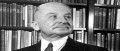
Friedrich A. Hayek (1899-1992)
Reprinted from the Freeman Friedrich A. Hayek, who died on March 23, 1992, at the age of 92, was probably the most prodigious classical liberal scholar of the 20th century. Though his 1974 Nobel Prize was in Economic Science, his
The Parenthood Market
Reprinted from the Freeman Economist Abigail Hall is under fire for her defense of selling babies. A research fellow with the Independent Institute, Hall makes a case for deregulating the adoption market in a post for the institute’s website, provocatively
Greece Should Learn from Ireland
Reprinted from the Independent Institute Greece missed its $1.8 billion loan repayment to the International Monetary Fund on June 30, and voters rejected the austerity measures creditors are demanding as the price of another bailout on last Sunday’s referendum. Greece
Why Ludwig von Mises Admired Sigmund Freud
Reprinted from the Freeman Sigmund Freud has been dead 76 years. Still, his ideas are daily in the news — debated and denounced — and yet so much a part of how we think. Defense mechanisms, Freudian slips, projections, talking
A Pseudo-Tax: Regulation of Public Utilities
Introduction Every American business and household is directly and indirectly impacted by the seemingly never-ending rise in public utility prices (including airports, electricity, gas, post, public transport, rail, seaports, telecommunications, and water & sewerage). The state and federal regulation of
Stephen Poloz’s Zen Moment
To cut or not to cut, that is the question. And fortunately for Bank of Canada Governor Stephen Poloz, it was a pretty easy question. A lagging US recovery, China’s downturn, lower oil prices and “bad weather” all contributed to
How to Outsource Your Compassion to the Government
Reprinted from the Freeman I saw the mom and her two little kids camped out in the shopping center parking lot. She held a sign asking for help to feed them. I bought some oranges and bananas for them. Imagine
The Chimera of Contracyclical Policies
[Republished from Human Action (1949)] An essential element of the “unorthodox” doctrines, advanced both by all socialists and by all interventionists, is that the recurrence of depressions is a phenomenon inherent in the very operation, of the market economy. But while
An economic myth that just will not die
An excerpt from today’s Open Europe news summary: Luc Coene, a member of the ECB’s supervisory board and a former Belgian Central Bank Governor, told Belgian daily De Tijd that a Grexit may have been a better option, arguing, “Because
Frédéric Bastiat Deserves a Posthumous Nobel
Reprinted from the Freeman If a posthumous Nobel Prize was awarded for crystal-clear writing and masterful storytelling in economics, no one would be more deserving of it than Frédéric Bastiat (June 30, 1801–December 24, 1850). He set the standard over a
The House Bubble: A Documentary
The idea was simple: Track down the people who predicted the housing crash and ask them what’s next. 35,000 miles and four years later, we’re test screening our first documentary “The Bubble” and finishing editing the follow up “The Bigger
Gold and Economic Inequality
Reprinted from Mises.org Inequality is a top news items for 2015 driven largely by the Baltimore riots, the minimum wage debate, Thomas Piketty’s bookCapital in the Twenty-First Century, and now the entry of socialist Bernie Sanders into the race for
Baltimore’s Unemployed and the True Cost of Minimum Wages
Reprinted from Mises.org Since President Johnson first declared war on poverty in his 1964 State of the Union address, this war has cost US taxpayers $22 trillion. The primary implement of this war has and continues to be public assistance